Expert radiation care for complex cancers. Precision planned personally.
Dr. Sapna Nangia is a senior Radiation Oncologist and Proton Therapy Specialist in India with 40 years of clinical experience, including nearly 35 years in oncology. Her expertise includes Proton Therapy, IGRT, IMRT, SBRT, Helical Tomotherapy and Brachytherapy.
With a clinical focus on head and neck, skull base, breast and gynaecological cancers, she provides personalised radiation treatment with an emphasis on precision and reducing radiation exposure to surrounding healthy tissues.
Advanced radiation therapy guidance with personalised treatment planning and clinical expertise.

Advanced radiation oncology,
matched to the cancer.
Radiation therapy can be used before surgery, after surgery, alongside systemic treatment, or as part of the primary treatment for selected cancers. The right technique depends on the diagnosis, the tumour and the individual patient.
Proton Therapy
Protons release their energy at the tumour and stop, reducing the dose to normal organs — used for selected head and neck, skull base, breast and gynaecological cancers.
IMRT
Intensity-Modulated Radiation Therapy shapes and modulates the dose to the treatment target. Dr. Nangia helped establish one of India’s early IMRT programmes.
IGRT
Image-Guided Radiation Therapy uses imaging during treatment for accurate positioning, and daily IGRT reduces the volume of normal tissue that receives radiation.
SBRT
Highly focused radiation in a few sessions for oligometastatic disease — a limited number of liver, lung, bone or lymph nodal metastases.
Helical Tomotherapy
Image guidance with highly modulated delivery: less dry mouth and swallowing difficulty in head and neck cancers, and bowel and bladder sparing in gynaecological cancers.
Brachytherapy
Internal radiation placed close to or within the treatment area, including advanced image-guided brachytherapy.

Meet Dr. Sapna Nangia.
Senior Radiation Oncology Specialist
Dr. Sapna Nangia brings 40 years of clinical experience and nearly 35 years in oncology. She graduated from the Armed Forces Medical College (AFMC), Pune, served for five years in the Army Medical Corps of the Indian Army, and completed her MD in Radiotherapy at Sanjay Gandhi Post Graduate Institute (SGPGI), Lucknow.
During her tenure at Batra Hospital she established one of India’s early IMRT programmes in 2002–2003, and led pioneering clinical work and important publications on head and neck IMRT. In 2009 she established radiation oncology services at Fortis Hospital, Noida — the first for the Fortis and IOSPL groups — and introduced IGRT and SBRT.
At Indraprastha Apollo Hospital, New Delhi, from 2012 to 2019, she led the modernisation of the radiation department, introduced MRI-based brachytherapy, developed memory-preserving radiation approaches for cheek cancers, and invented and patented a deep-inspiration breath-hold (DIBH) device for heart-sparing radiation in breast cancer.
Since 2019 she has led the proton therapy programme for head, neck, skull base, breast and gynaecological cancers at Apollo Proton Cancer Centre, Chennai — the first proton therapy centre in this part of Asia. Her work focuses on precise delivery designed to improve outcomes and reduce adverse effects, and includes inoperable head and neck, recurrent and complex skull base cancers, where proton therapy has advantages over X-rays.
She is also actively involved in clinical research, publications, teaching and the mentoring of postgraduates and registrars.
Know More & Get In Touch- MBBS — AFMC, Pune
- MD Radiotherapy — SGPGI, Lucknow
- Five years — Captain, Army Medical Corps
- Patented a device for manual DIBH for heart-sparing breast radiation.
- Postulated and implemented the concept of hippocampal-sparing radiotherapy for Bucco-alveolar (Cheek) cancer for preservation of memory and cognition.
- Developed a mucosal-sparing technique for Proton therapy to reduce the radiation dose to the lining of the mouth to decrease radiation side effects.
- Devised a workflow for breath-hold treatments on Accuray Radixact Helical Tomotherapy machines.
- Postulated and published in the Red Journal, separate risk assessment and more requirement of heart-sparing radiotherapy in South Asians.
- Reg. No. 15167
- Senior Radiation Oncologist,
- Apollo Proton Cancer Centre, Chennai
Why patients may choose
Dr. Sapna Nangia.
Including nearly 35 years in oncology
One of India’s first, established at Batra Hospital
At Apollo Proton Cancer Centre, Chennai
Proton, IGRT, IMRT, SBRT, Tomotherapy, Brachytherapy
Four cancer groups,
treated in depth.
Dr. Sapna Nangia currently focuses on four major cancer groups, treated with radiation therapy and, where appropriate, proton therapy.
Head & Neck Cancers
IMRT, IGRT, Tomotherapy and proton therapy- Oral cavity — cheek (buccal mucosa), alveolus, tongue
- Oropharynx — tonsil and base of tongue
- Salivary gland cancers — adenoid cystic, mucoepidermoid and others
- Nasopharyngeal cancer
- Laryngeal and hypopharyngeal cancers
- Paranasal sinus cancers
Skull Base & Sinonasal
Where proton therapy improves outcomes- Clival chordoma
- Adenoid cystic carcinoma of the skull base
- Temporal bone squamous cancers
- Paranasal sinus squamous cancers
- Sinonasal neuroendocrine (SNEC) and undifferentiated (SNUC) cancers
- Teratocarcinosarcoma and SMARCB1-deficient cancers
Breast Cancer
Cardiac-sparing radiation- Left-sided breast cancer with DIBH
- Proton therapy to spare the heart, its vessels and muscle
- Post-mastectomy radiotherapy
- Reduced dose to the lungs and opposite breast
- Lower second-cancer risk in younger women
- Patients with diabetes, hypertension or cardiotoxic chemotherapy
Gynaecological Cancers
Tomotherapy and image-guided brachytherapy- Cervical cancer
- Endometrial (uterine) cancer
- Image-guided brachytherapy
- Small bowel, rectum and bladder sparing
- Pelvic bone and bone-marrow sparing
- Fewer urinary symptoms and insufficiency fractures
Inoperable, recurrent and complex cancers
Inoperable head and neck cancers, recurrent disease and complex skull base tumours are difficult to treat, and proton therapy has advantages over X-rays in these clinical situations. Send your reports for an opinion before you travel.
The dose stops where
the tumour stops.
Proton therapy uses protons to deliver radiation to selected tumours. A conventional X-ray beam keeps depositing dose on its way out of the body; a proton beam travels to a set depth, releases most of its energy there, and stops.
Its advantages include a proven reduction in acute side effects at certain disease sites, improved outcomes in various cancers, and a reduced dose to normal, unaffected organs.
Photon beam

Dose is deposited before, through and beyond the target — the tissue on the far side is irradiated too.
Proton beam

Energy peaks at the tumour and falls to zero immediately after — the tissue behind it receives almost nothing.
Proton therapy is suitable only for selected patients. Cancer type, tumour location, previous treatment and the objective of treatment all decide it — which is exactly what a second opinion is for.
Your treatment should be
planned around you.
Selecting a radiation treatment is not simply about choosing a technology. The appropriate approach depends on the individual patient’s cancer — which is what the first consultation is for.
Send your reports
Email your biopsy and histopathology report, recent CT, MRI or PET imaging and a summary of treatment already given — or call the clinic and we will guide you on what to send.
Personal assessment
Dr. Nangia reviews the diagnosis and pathology, the tumour type, stage, location and extent, your imaging, previous treatments and any planned surgery or systemic treatment.
Technique and plan
That assessment decides whether radiation therapy or proton therapy is appropriate and which technique suits your cancer, followed by immobilisation, planning scans and personal contouring.
Treatment & follow-up
Daily treatment with weekly review, supportive care through the course — nutrition, physiotherapy and swallowing therapy where needed — and structured follow-up afterwards.
Conferences, teaching
and academic work.
Presenting and teaching at proton therapy and oncology meetings in India and abroad.
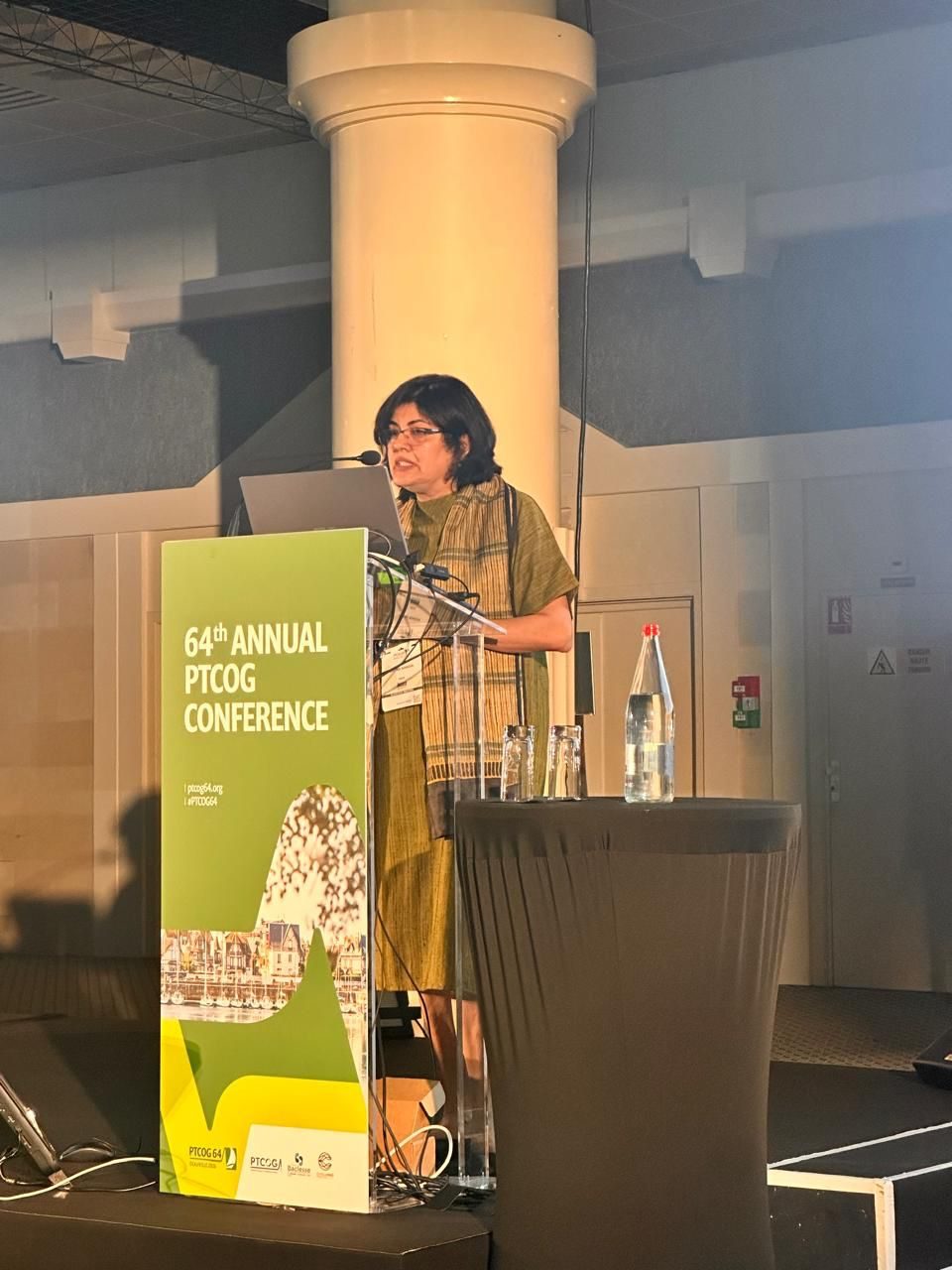
Presenting an analysis of MRI changes in 57 patients with skull base lesions treated with proton therapy, at the 64th Annual Meeting of the Particle Therapy Co-operative Group, June 2026.
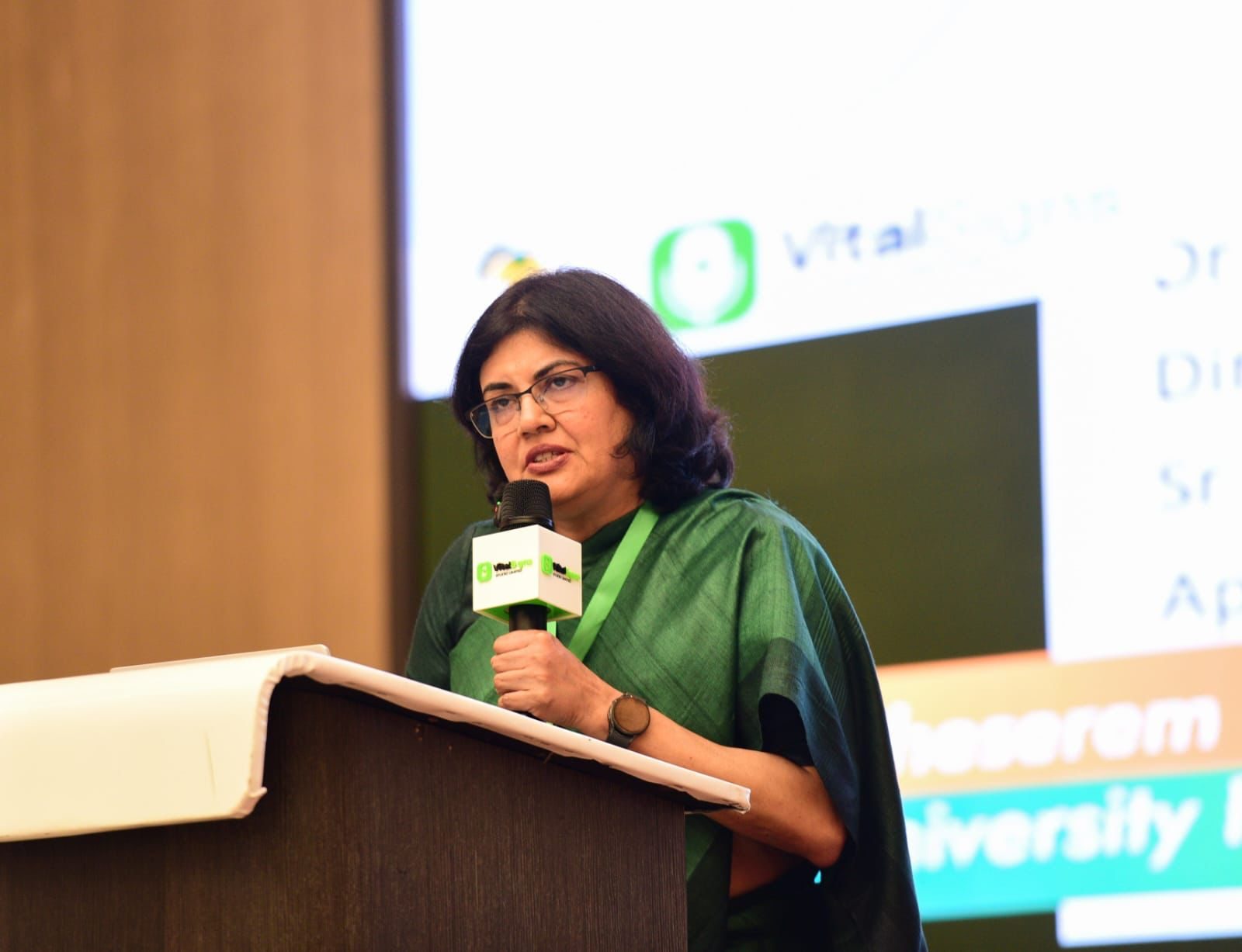
Delivering “The Expanding Role of Proton Therapy in Head Neck Cancers” at the Annual Scientific Conference of the African Radiation Oncology Group, July 2026.
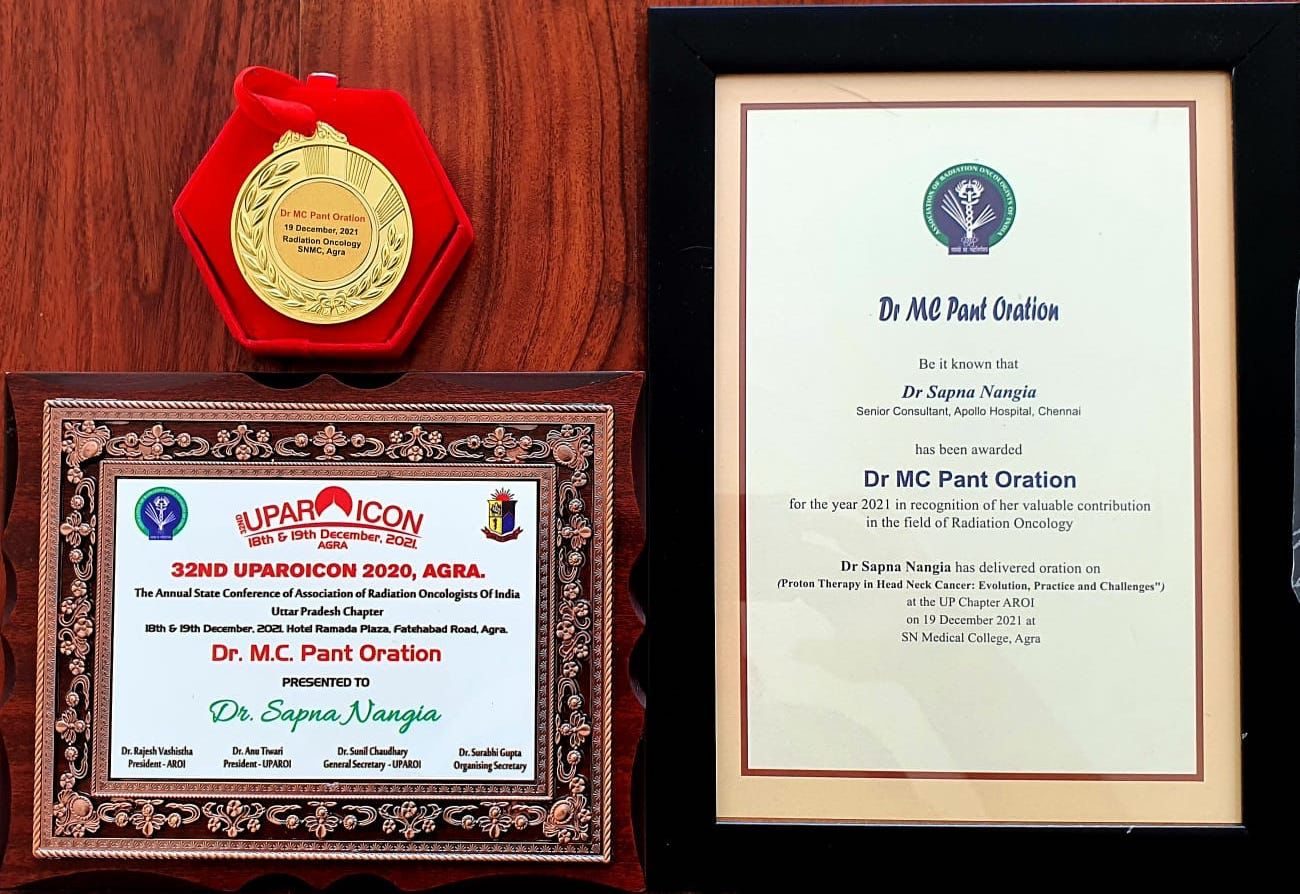
Awarded by the Association of Radiation Oncologists of India (UP Chapter) in recognition of her contribution to radiation oncology.
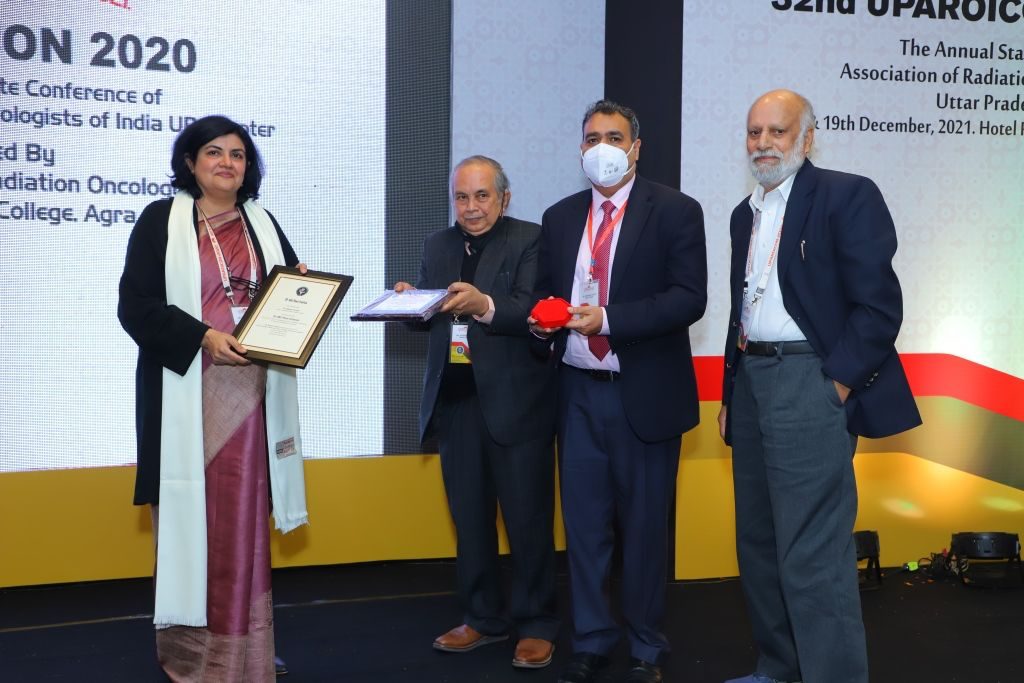
32nd UPAROICON, S.N. Medical College, Agra — December 2021.
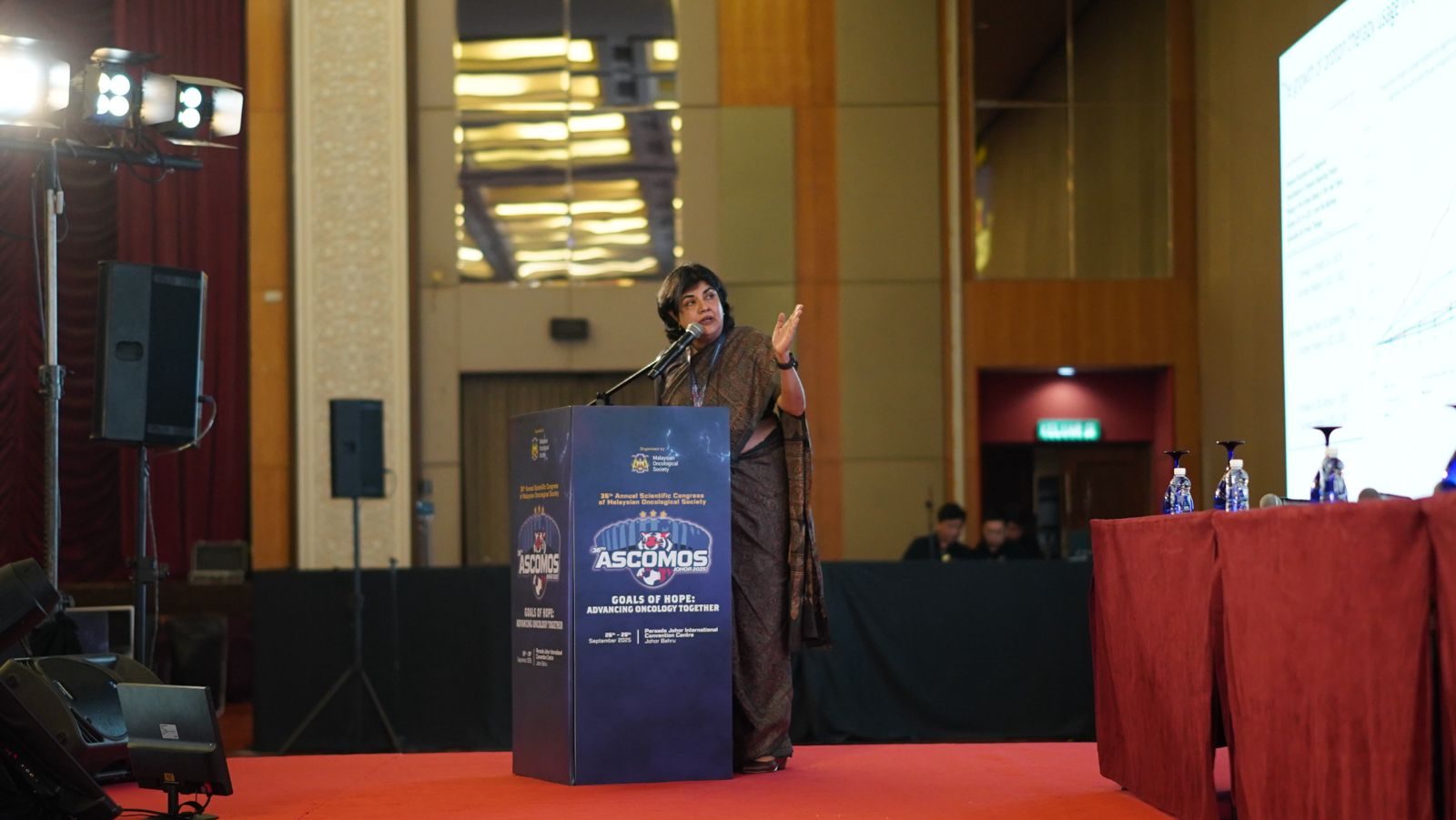
“Application of Proton Therapy for Head and Neck Cancers: Sharing of Evidence and Experience”, at the 36th Annual Scientific Congress of the Malaysian Oncological Society, September 2025.
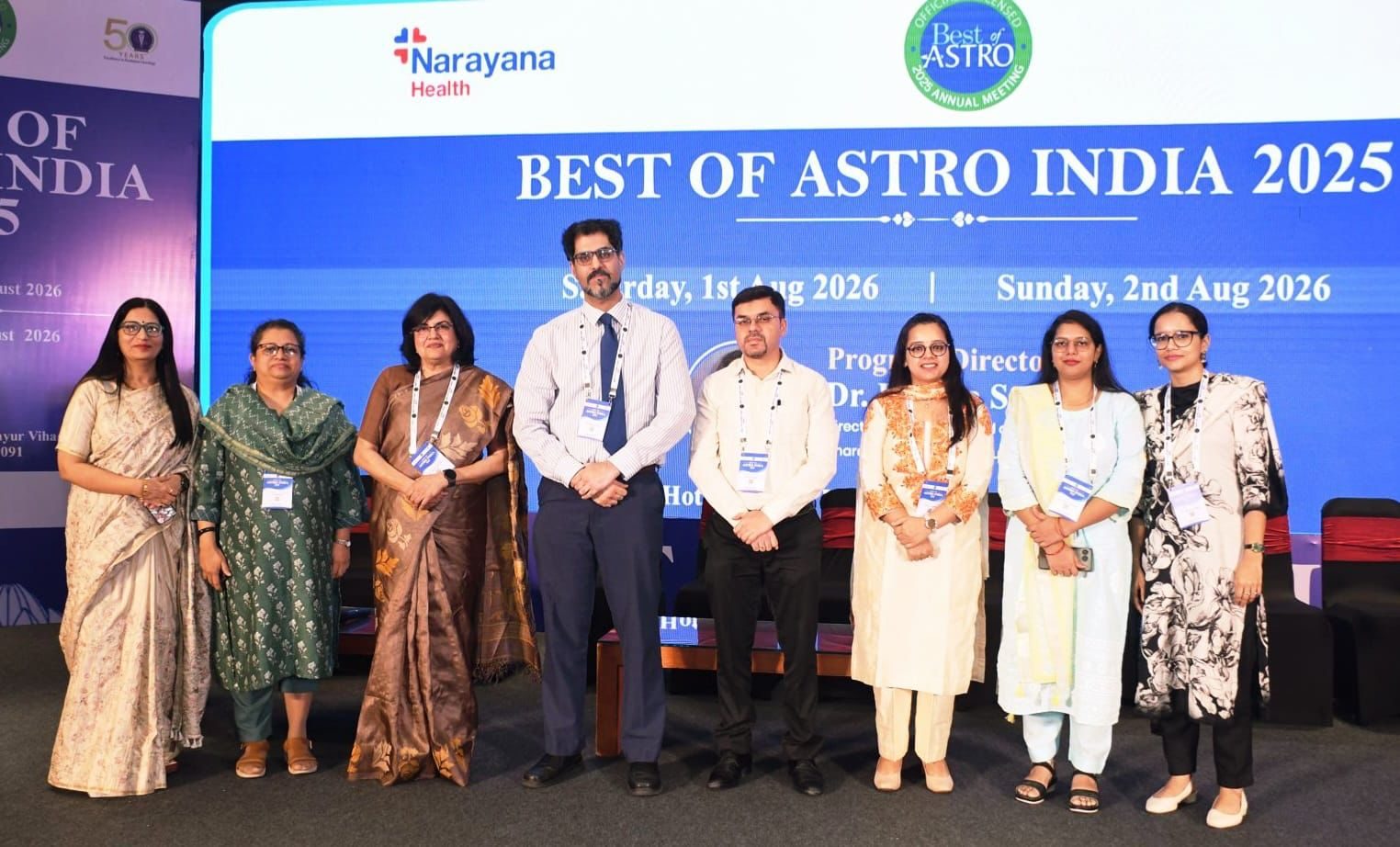
Presenting the TORPEdO trial at Best of ASTRO India 2025, New Delhi, 1–2 August 2026.
Clinical research, publications
and patented innovation.
Dr. Sapna Nangia has contributed to clinical research, publications and innovation in radiation oncology.
Research & Publications- Research on IMRT and head and neck cancer treatment
- Cardiac-sparing radiation therapy and advanced radiation techniques
- A patented DIBH device for left-sided breast cancer radiation
- Individualised cardiac risk assessment for the South Asian population
- Teaching and mentoring of postgraduates and registrars
The things people ask before they call.
If your question is not here, call the clinic — it would rather answer it than have you guess. +91 98910 10390
Get in touchMedically reviewed by Dr. Sapna Nangia, MD (Radiotherapy), Reg. No. 15167 — last reviewed .
Get personalised guidance
for your cancer treatment.
If you or a family member has been diagnosed with head and neck, skull base, breast or gynaecological cancer, and radiation therapy or proton therapy is being considered, send your reports or call the clinic.
What Dr. Nangia will assess
- Cancer diagnosis and pathology
- Tumour type and stage
- Tumour location and extent
- CT, MRI, PET or other imaging
- Previous cancer treatments
- Planned surgery or systemic treatment
- Overall health and treatment objectives
Request a call back
Leave your number and the clinic will call you to arrange a consultation.
No. 4/661, Dr. Vikram Sarabhai Instronic Estate,
Dr. Vasi Estate Rd, Phase II, Tharamani,
Chennai, Tamil Nadu 600096